- Home
- Insights & Immigration News Alerts
- Insights
- Nearshoring Trends: How Immigration Challenges Are Shaping U.S. Talent Strategies
ARTICLE
Nearshoring Trends: How Immigration Challenges Are Shaping U.S. Talent Strategies


By Nicole Hartnett, Managing Attorney at Corporate Immigration Partners
The 2025–2026 policy environment has underscored how vulnerable U.S. workforce planning becomes when immigration pathways narrow. Even as employers face new barriers to moving talent into the country, the need for specialized skills has not diminished — and organizations are adapting. Managing Attorney Nicole Hartnett breaks down the emerging trends shaping how employers are responding.
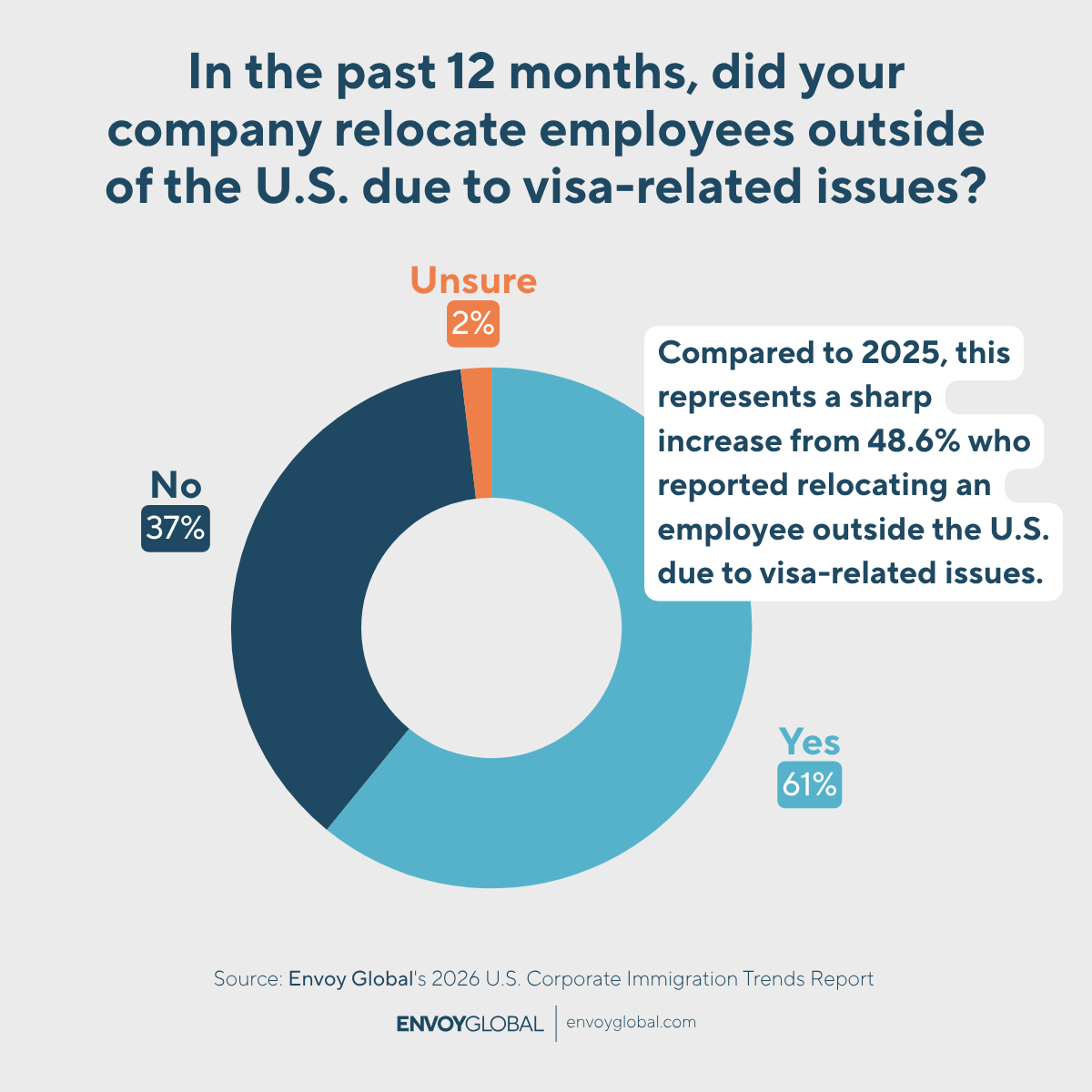
With traditional visa routes becoming less predictable, companies are finding new ways to keep critical work moving. Nearshoring and offshoring have emerged as reliable strategies that allow employers to maintain access to essential talent without depending solely on U.S. immigration channels.
H‑1B‑Heavy Sectors Lead the Nearshoring Shift
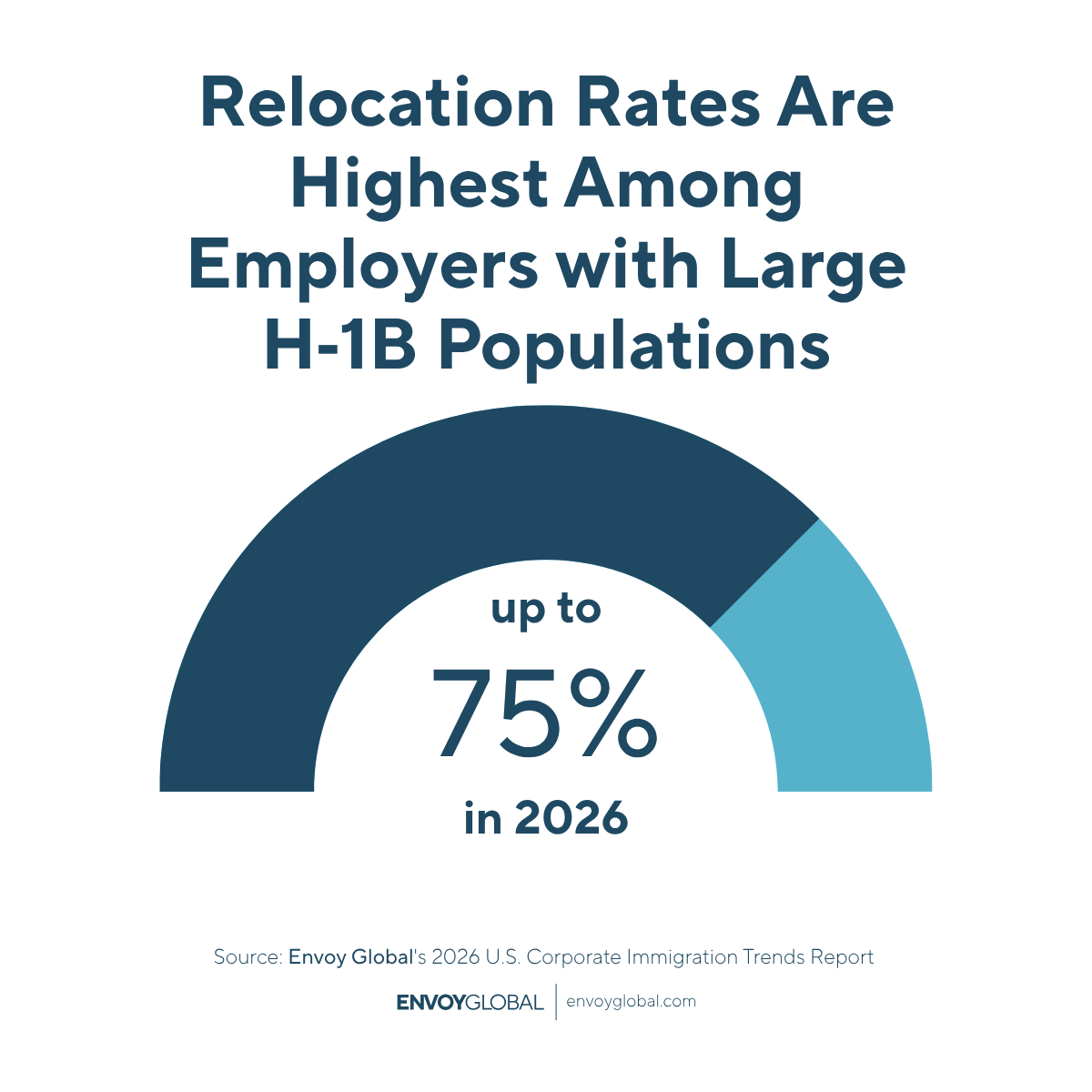
Organizations with large H‑1B populations are among the most likely to adopt nearshoring and offshoring strategies.
This year’s 2026 U.S. Corporate Immigration Trends Report findings show that financial and professional services, along with technology, report the strongest pivot toward global redistribution.
Nearshoring and Offshoring Trends: Insights from Nicole Hartnett
Both sectors rely heavily on specialized, high-skilled talent pools, including software engineers, data scientists, quantitative analysts and consulting professionals, where domestic labor supply has not consistently met demand. Historically, the H-1B and L-1 visa programs have served as critical workforce pipelines to fill these gaps. However, increasing visa unpredictability has materially reduced employers’ ability to access and retain this talent in the U.S. reliably.
In particular:
- The H‑1B cap and lottery system introduce a structural constraint that makes workforce planning inherently uncertain, even for highly qualified candidates.
- Ongoing policy variability and administrative delays exacerbate business risk, particularly in project-based and client-facing work, where staffing continuity is critical.
- As a result, financial services firms and technology companies, both of which operate globally integrated delivery models, are uniquely positioned to respond through global redistribution strategies. These include expanding operations in nearshore hubs (e.g., Latin America) or offshore locations (e.g., India, Eastern Europe), where talent can be deployed without U.S. immigration constraints.
Moreover, these sectors have already built the infrastructure, compliance frameworks and operational maturity to support distributed teams, making the pivot more feasible and scalable compared to less globalized industries.
A Strategic Recalibration of Workforce Models
Nearshoring and offshoring are no longer purely cost-driven decisions; they are increasingly seen as risk-mitigation strategies in response to structural limitations in the U.S. immigration system.
The data in our report reflect a broader recalibration of workforce strategy, where access to talent—not location— is the primary driver, and where immigration constraints are accelerating the decentralization of high-skilled work.
Working with Immigration Professionals
Even as employers adapt through nearshoring and offshoring, navigating today’s immigration landscape still requires specialized expertise. Recent shifts in the U.S. immigration landscape make it increasingly difficult for organizations to plan ahead with confidence.
Partnering with experienced immigration counsel helps employers anticipate risk and keep critical talent initiatives on track — whether that talent is deployed in the U.S. or abroad.
To explore these developments in greater depth and understand the broader forces shaping corporate immigration strategy in 2026 download the Envoy Global 2026 U.S. Corporate Immigration Trends Report.
Download the Envoy Global 2026 U.S. Corporate Immigration Trends Report.
Authored By

Nicole Hartnett
Managing Attorney
Nicole Hartnett is a Managing Attorney at Corporate Immigration Partners, where she advises employers on employment-based immigration strategy, workforce planning and global talent programs. She supports organizations ranging from startups to Fortune 500 companies in navigating evolving immigration policies and building effective sponsorship strategies. She is a member of the American Immigration Lawyers Association (AILA) and is licensed to practice in New York and North Carolina.
Content in this publication is for informational purposes only and not intended as legal advice, nor should it be relied on as such. Envoy Global is not a law firm, and does not provide legal advice. If you would like guidance on how this information may impact your particular situation and you are a client of the U.S. Law Firm, consult your attorney. If you are not a client of the U.S. Law Firm working with Envoy, consult another qualified professional. This website does not create an attorney-client relationship with the U.S. Law Firm.